Load calculation
Written capacity numbers for your service.
Subpanel Installation for EV Chargers Redondo Beach CA gives your home the dedicated 240V capacity a Level 2 charger needs, without overloading your main panel. We handle load calculations, permits, and EV charger subpanel wiring in Redondo Beach for Tesla, ChargePoint, Wallbox, and Emporia owners from North Redondo to Riviera Village. If your main panel is full or your breaker keeps tripping, we size the subpanel correctly the first time.
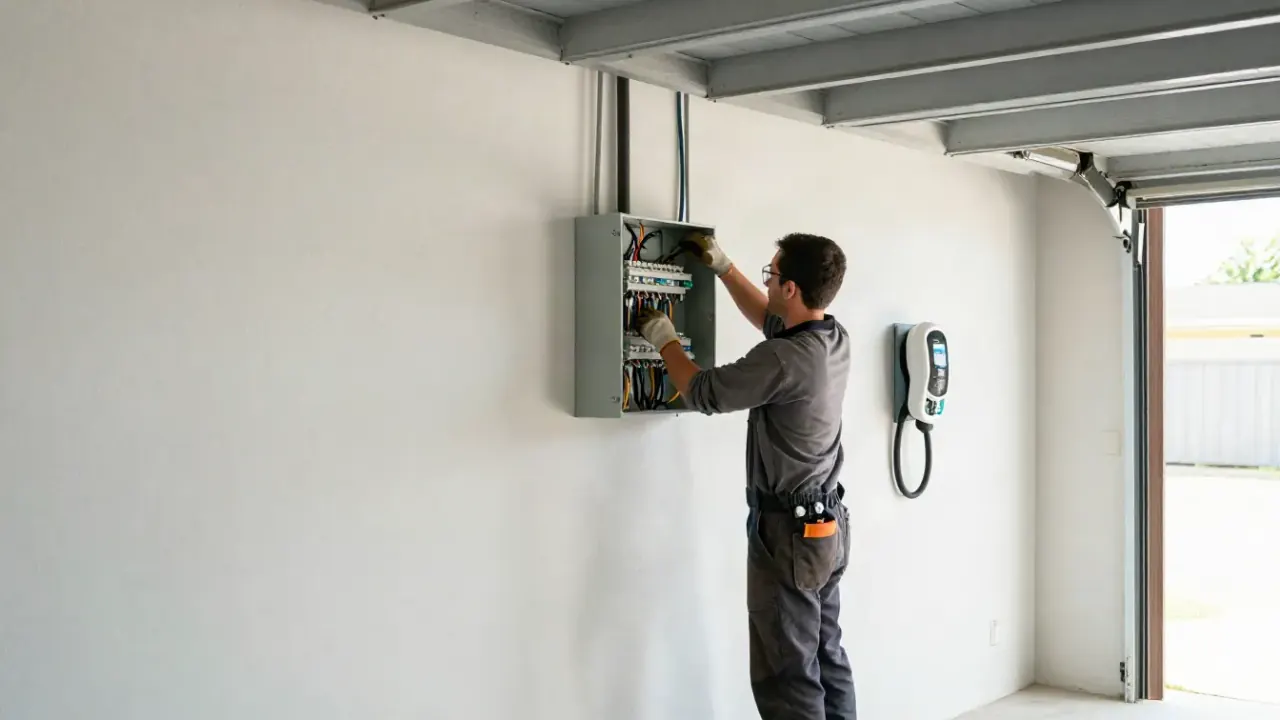
Every subpanel job includes the load calculation, permit, materials, installation, and inspection coordination. Charger hardware and any trenching for a detached garage run are quoted separately so you see exactly what you are paying for.
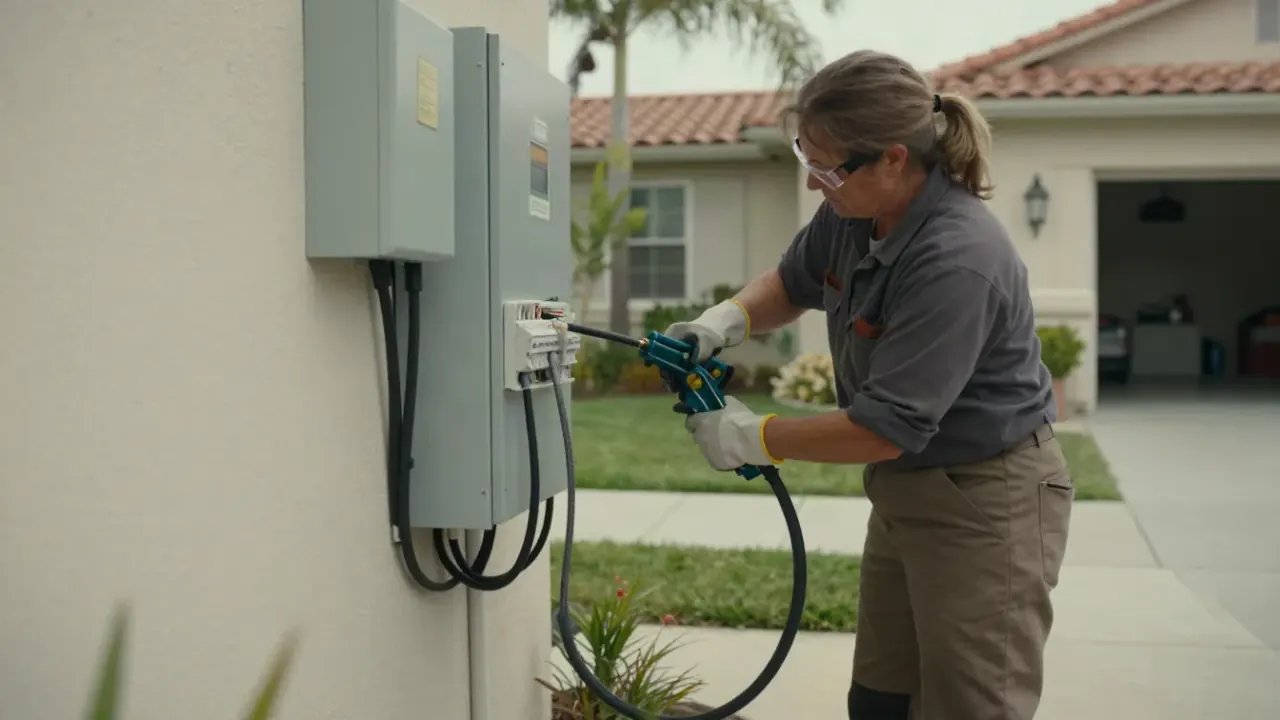
We install subpanels for homeowners and tenants who need dedicated 240V capacity for an EV charger. The work covers the load calculation, feeder, breaker, and charger circuit, with the permit handled for you.
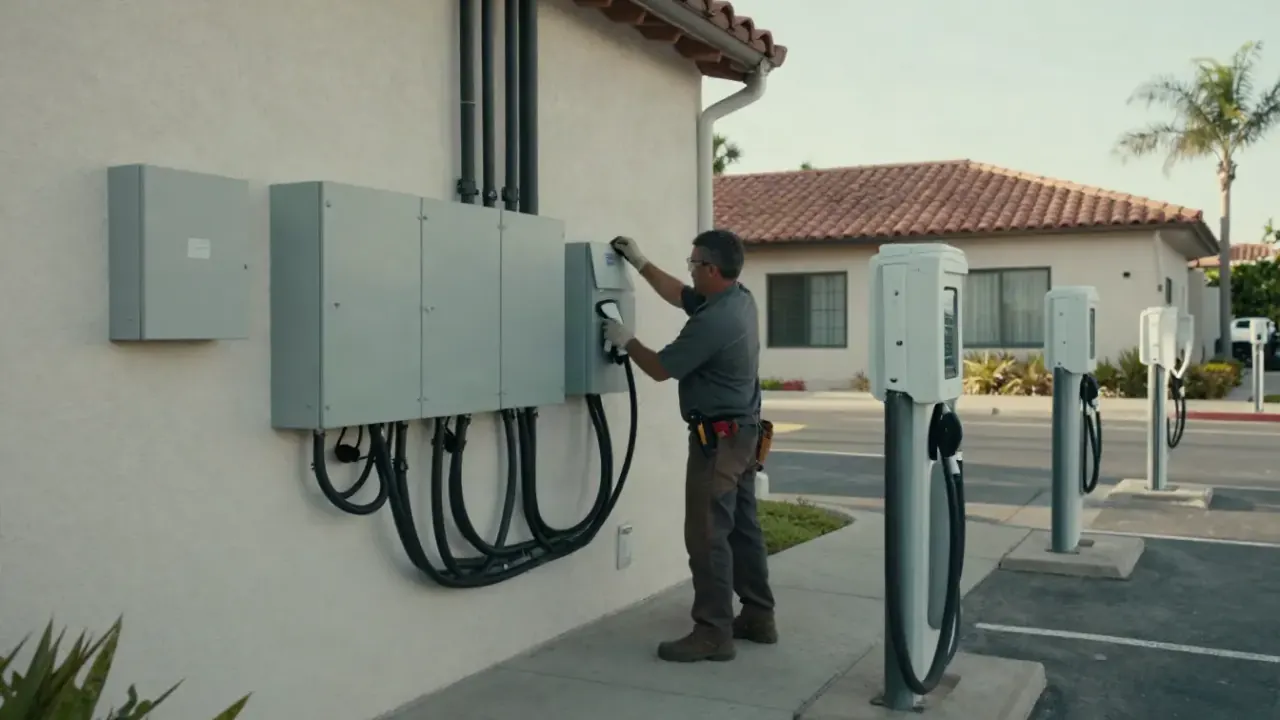
We build subpanel-fed charger banks for property managers and business owners who need multiple vehicles charging on one service. The work covers load management, feeder sizing, and inspection documentation.
A subpanel is a secondary breaker box fed from your main service panel, and Subpanel Installation for EV Chargers Redondo Beach CA means running a dedicated feeder to it so your EV charger gets its own 240V circuit. We start with a load calculation under NEC Article 220, then mount the subpanel, pull 6 AWG or 8 AWG copper wire through conduit, and land a 240V circuit breaker sized for your charger. The result is a clean, labeled power source that does not steal capacity from your kitchen, dryer, or AC.
Most Redondo Beach homes were built before EVs existed, so the main panel is already carrying a full load. Adding a Level 2 EV charger to a 100-amp panel without a load assessment is how you get breaker overload, voltage drop, and a charger that overheats mid-session. We see this constantly in the older tracts around El Nido and Golden Hills. If you have been searching for electrical subpanel installation near me Redondo Beach, the fix is usually a subpanel fed from the main, not a full service upgrade.
We size the subpanel to your actual load, not a guess.
Five steps, one visit for most homes, and a walkthrough at the end. Here is exactly what happens from your first call to the day your charger goes live.
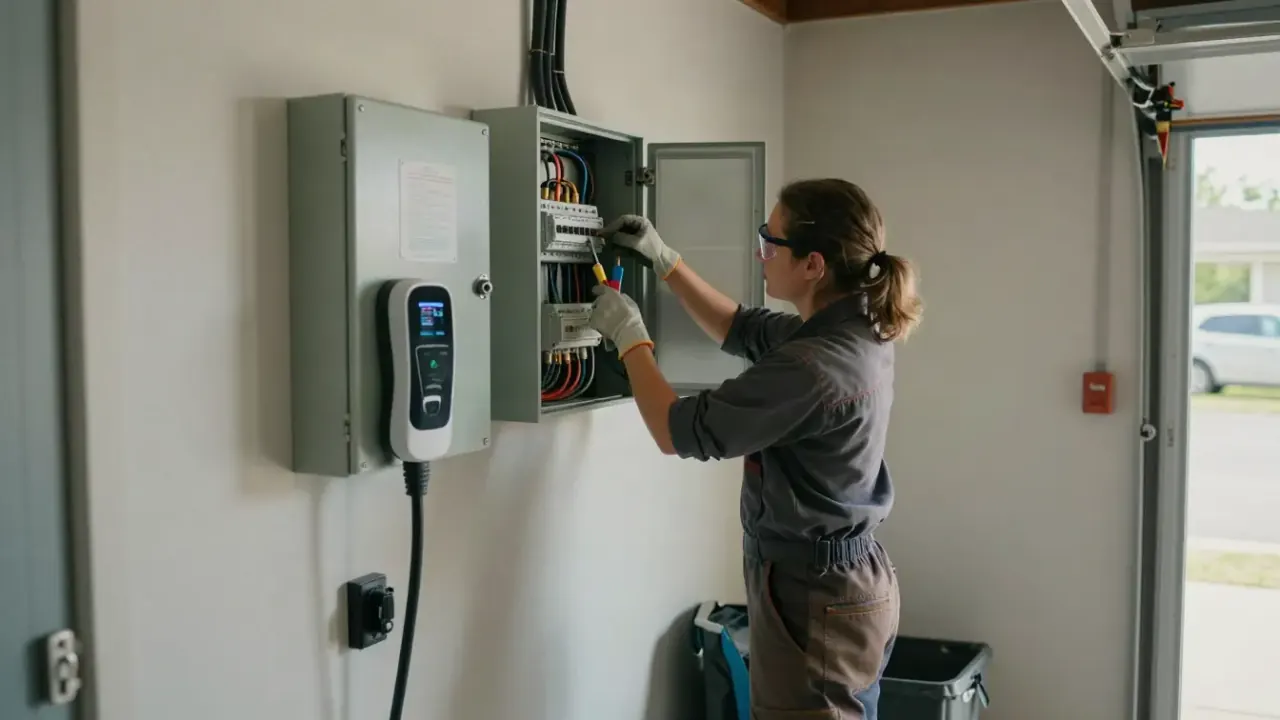
We ask for your main panel amperage, the charger model, and where you want the unit mounted. Send a photo of the panel label and the wall location, and we can usually quote the job before we arrive. Most calls take ten minutes and end with a firm number, not a range.
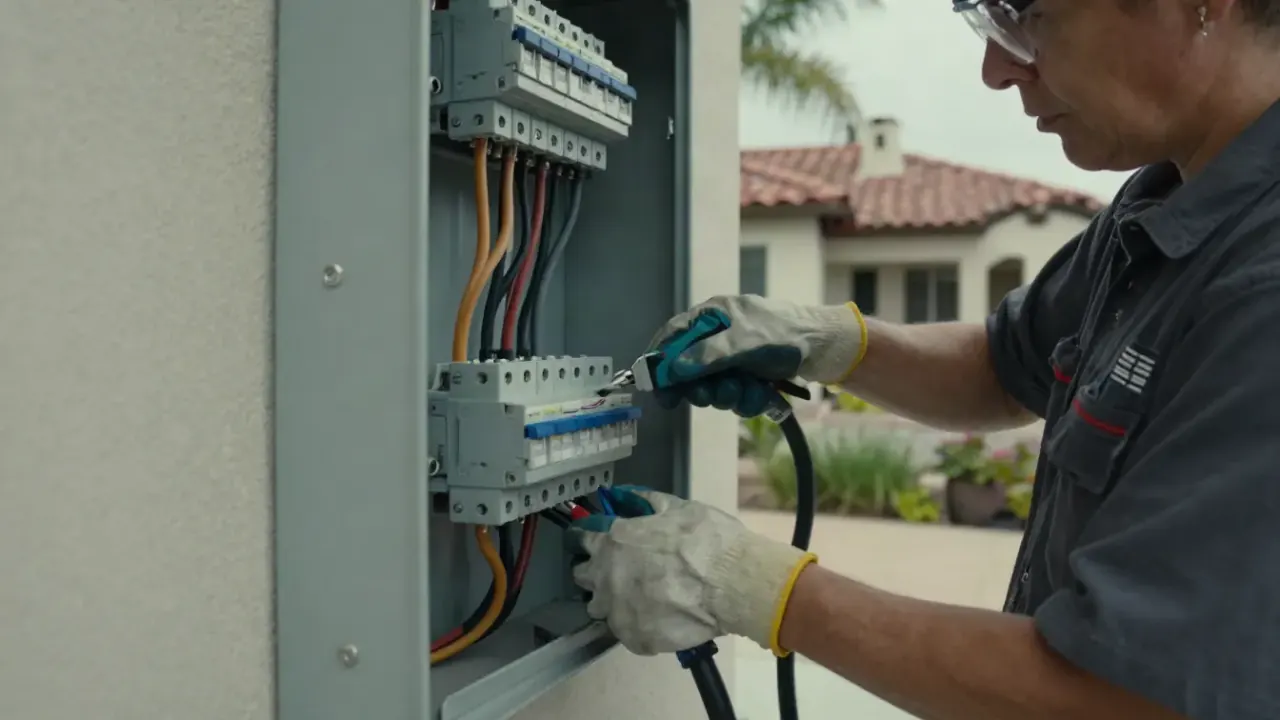
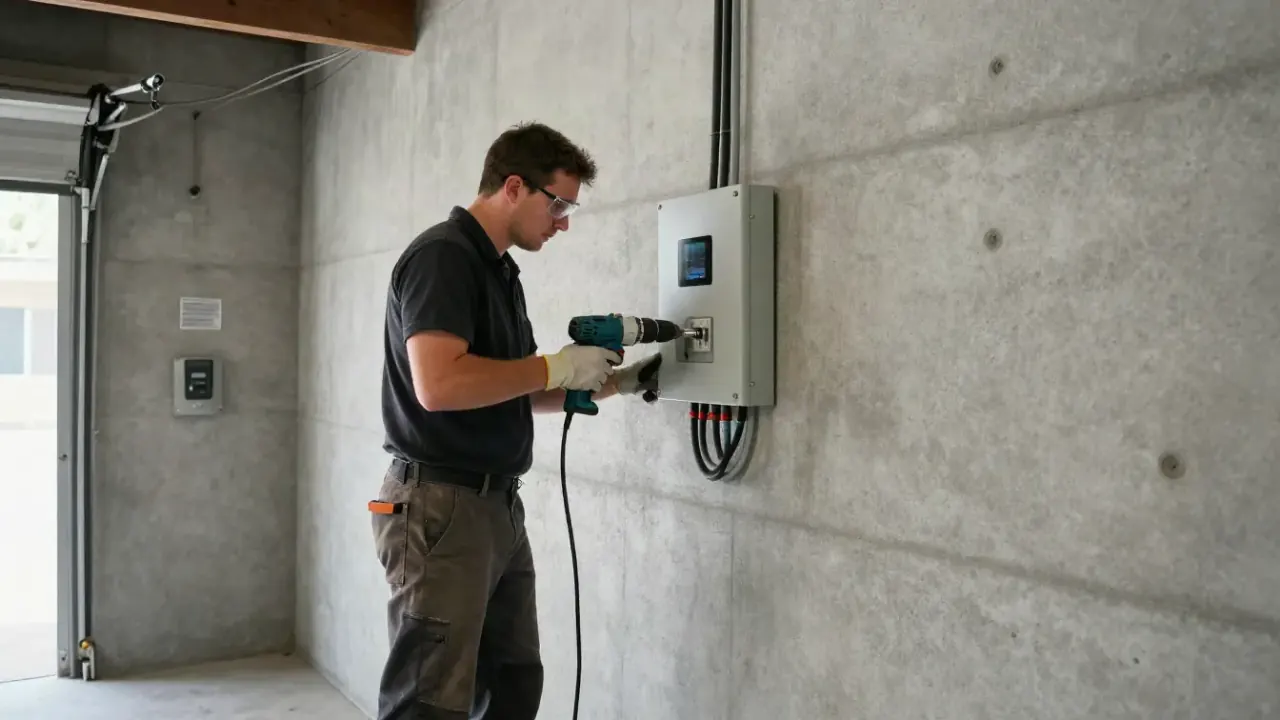
On site we run a load calculation under NEC Article 220 to confirm your service can carry the added EV load. We check existing breakers, measure available capacity, and decide whether a subpanel, a circuit swap, or a service upgrade is the honest answer. You get the reasoning, not just a verdict.
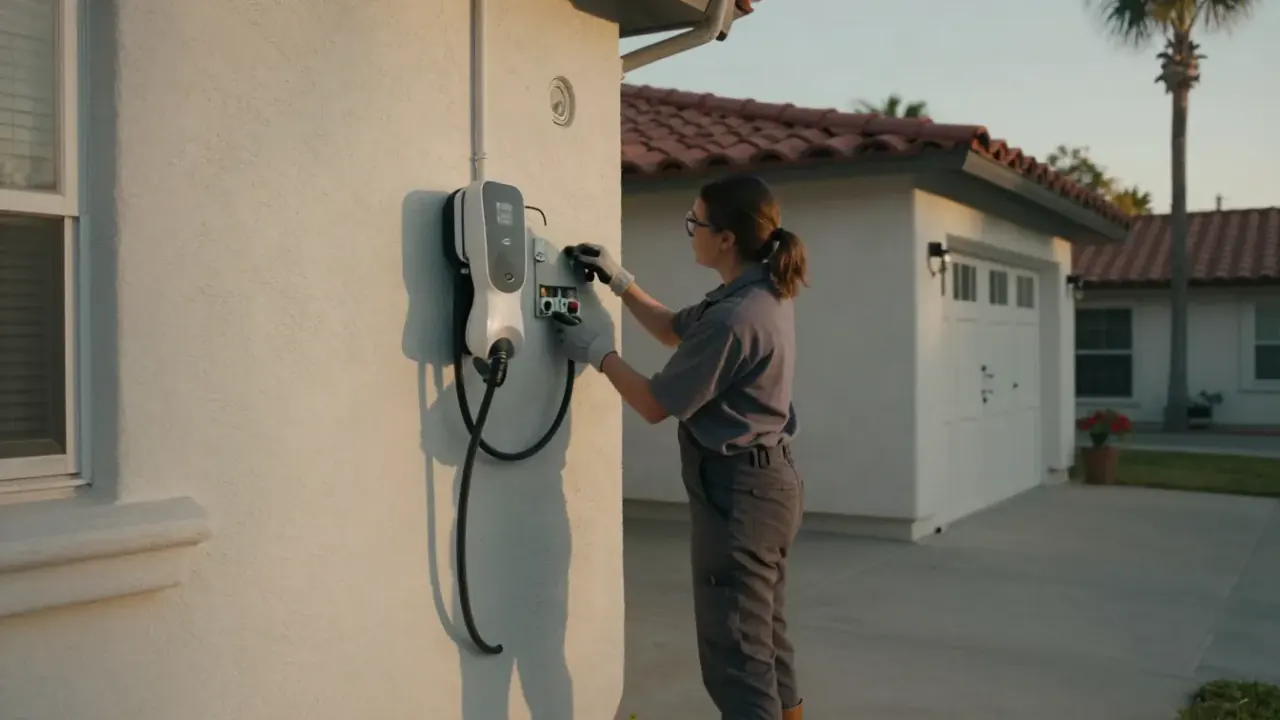
We pull the electrical permit through the City of Redondo Beach and order the enclosure, 240V circuit breaker, conduit, and copper conductors. A typical residential subpanel job takes two to four hours of install time once materials are on site. We schedule the inspection before we leave.
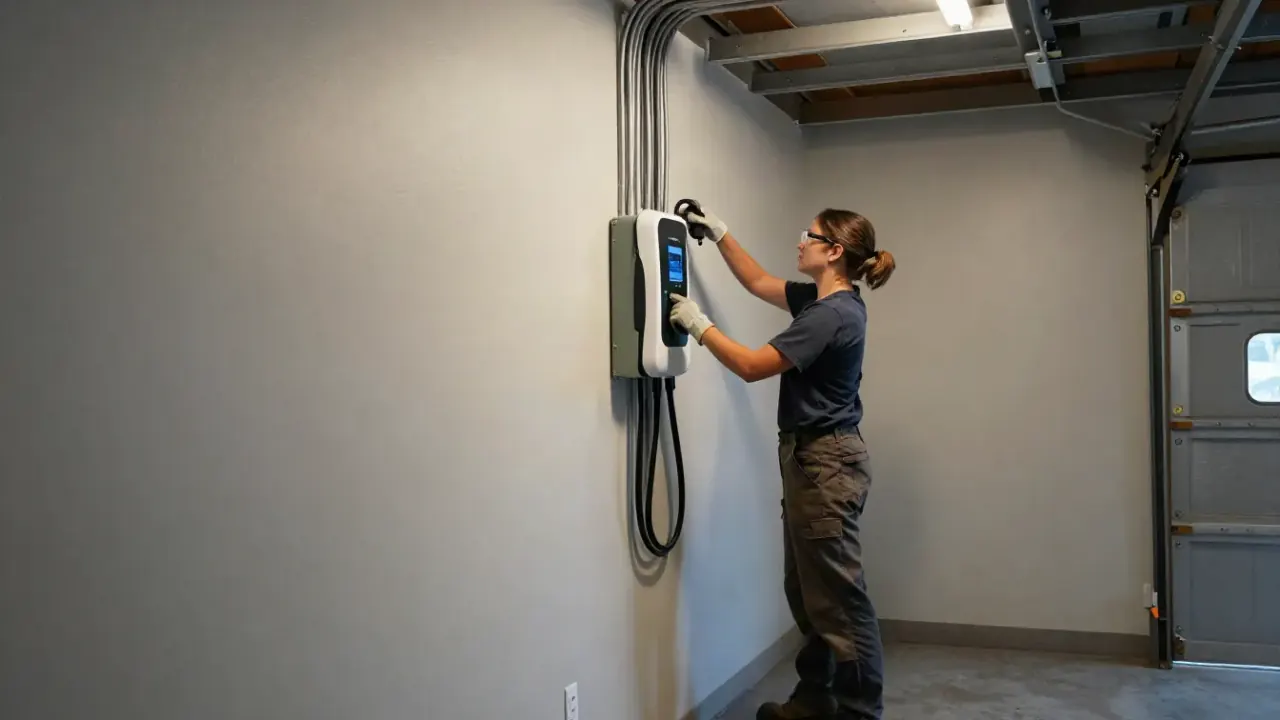
We mount the subpanel, run the feeder through conduit, strip and terminate conductors with a torque screwdriver to manufacturer spec, and land the charger circuit. Every connection gets torqued and re-checked with a multimeter before we close anything up. Loose wiring connections are the number one cause of charger faults we get called to fix.
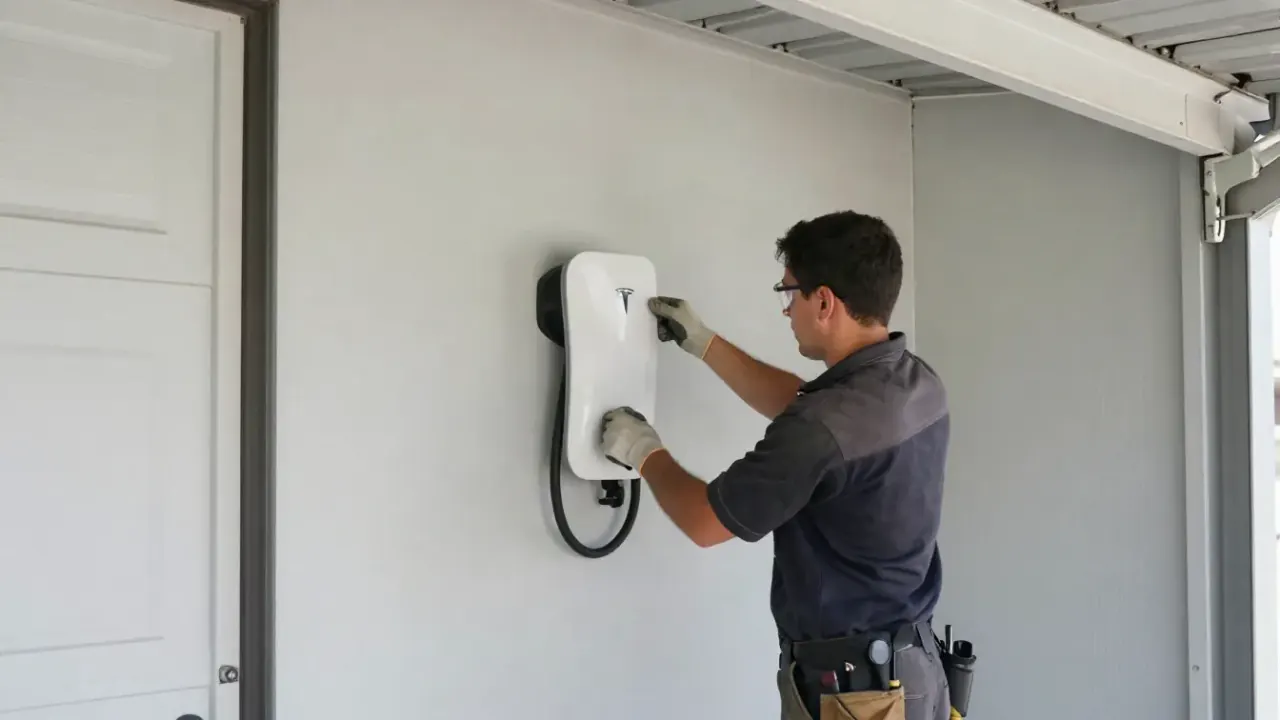
We energize the circuit, verify voltage at the charger, and run a live charging session to confirm the vehicle communicates and holds amperage. Then we label every breaker, show you the shutoff, and hand over the permit paperwork. You leave knowing which breaker controls what.
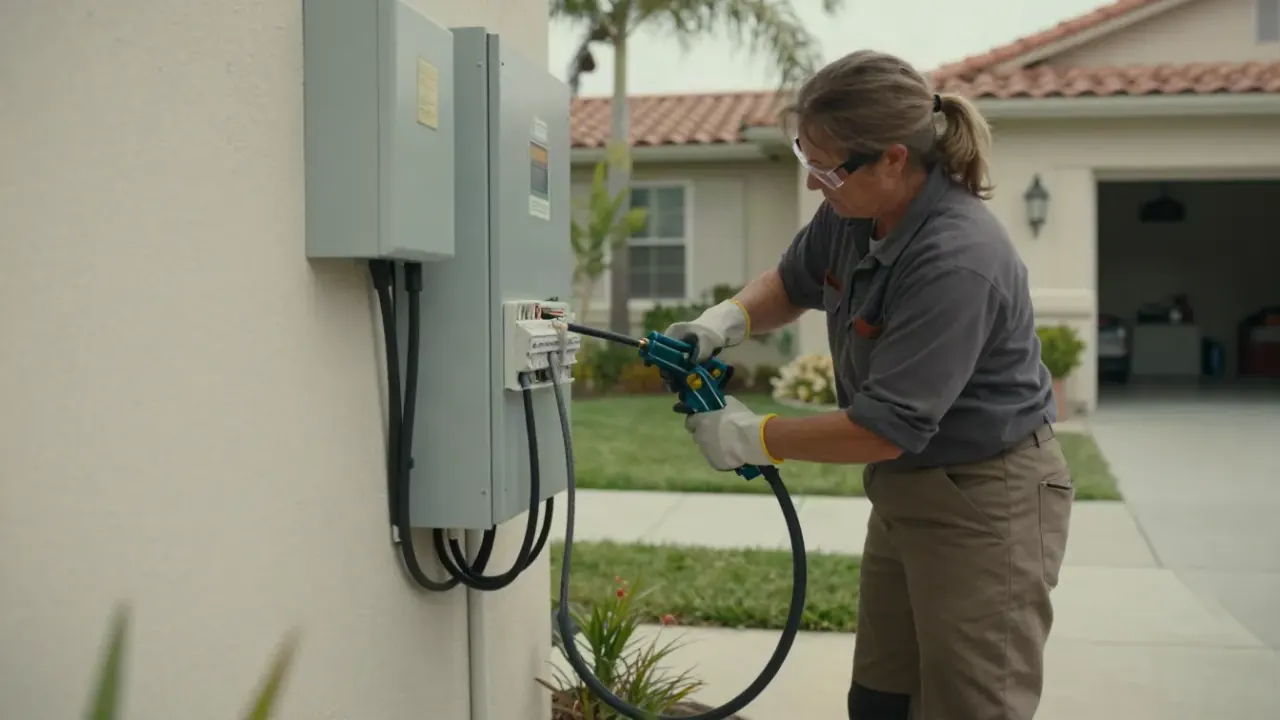
Used to tighten every breaker and lug connection to the manufacturer's specified torque value, which prevents the loose wiring connections that cause most charger faults.
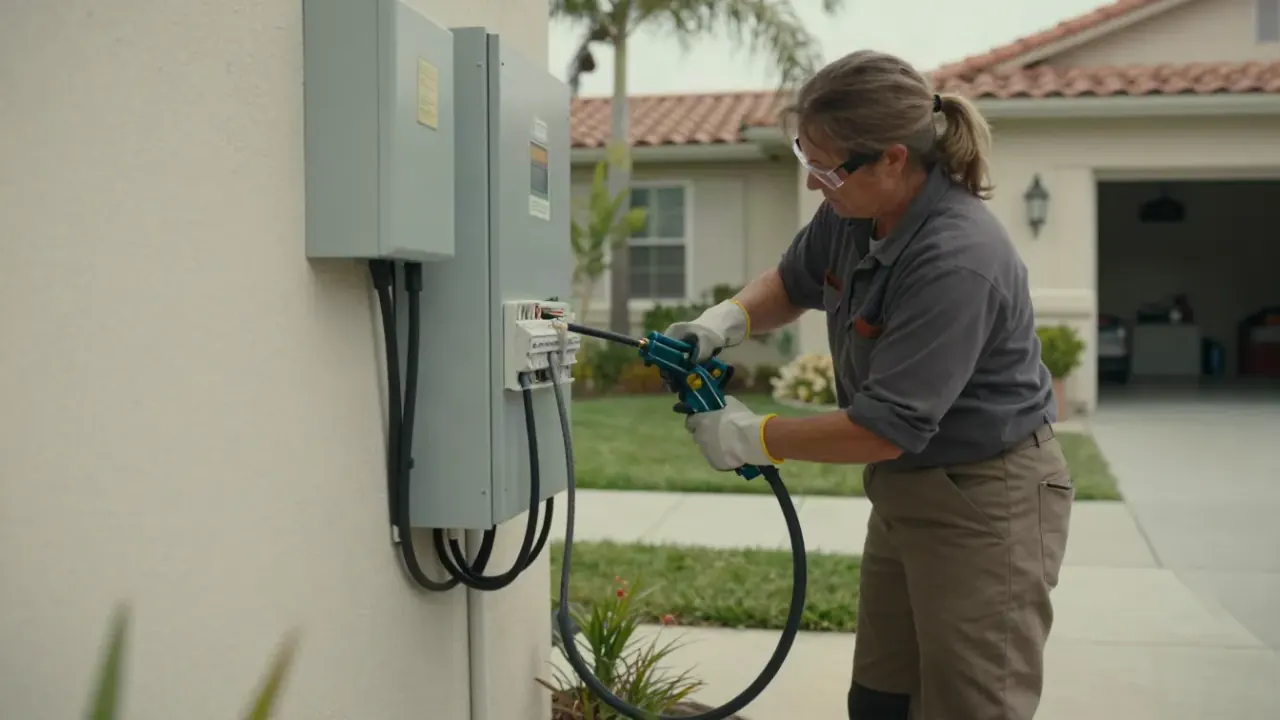
Verifies voltage and continuity at the subpanel and charger before and after energizing, so we confirm the circuit is correct before the vehicle ever plugs in.
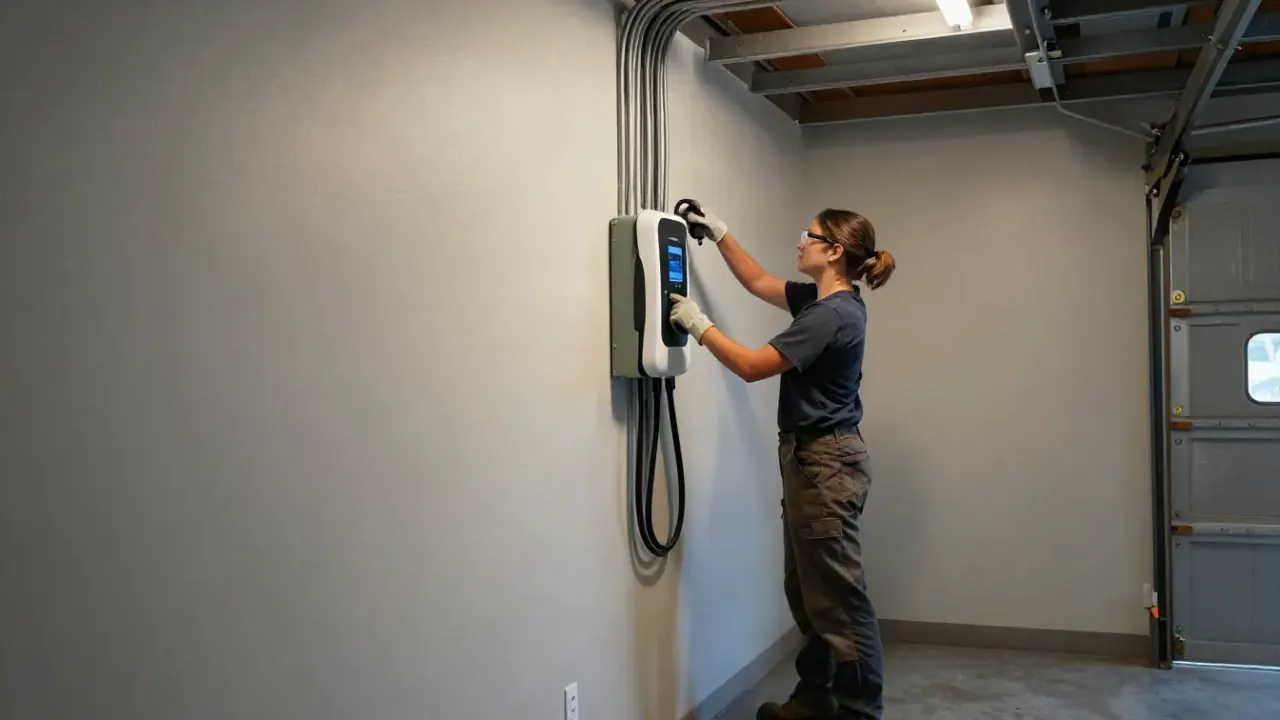
Cuts and strips 6 AWG and 8 AWG copper conductors cleanly, so terminations seat fully in the breaker lugs without nicked strands.
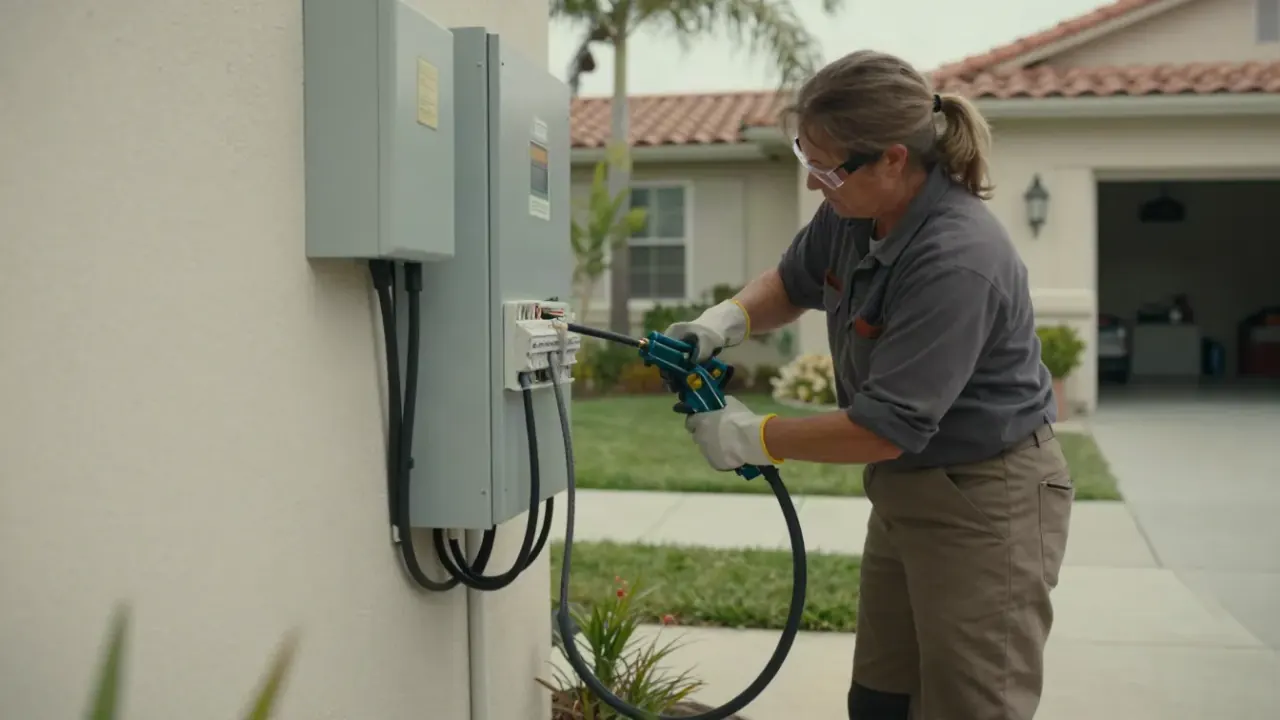
Secures the feeder where it enters the subpanel and protects conductors on exterior or garage runs, keeping the installation code-correct and weather-tight.
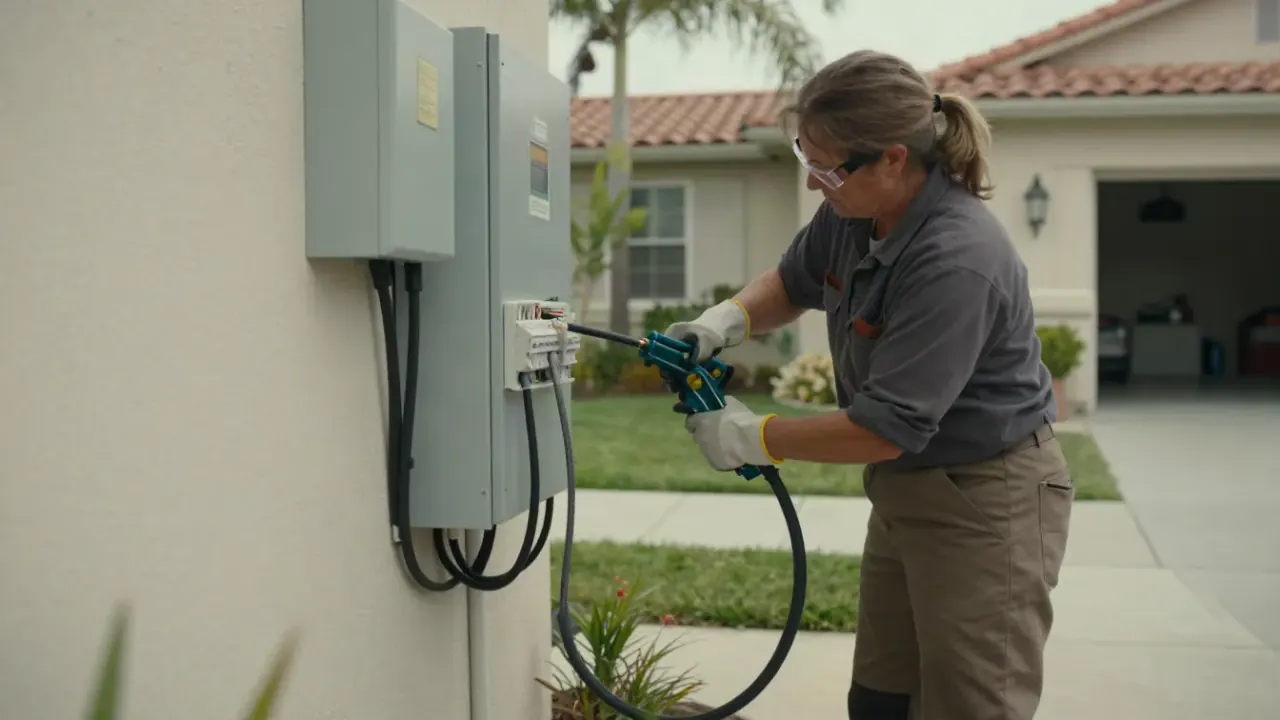
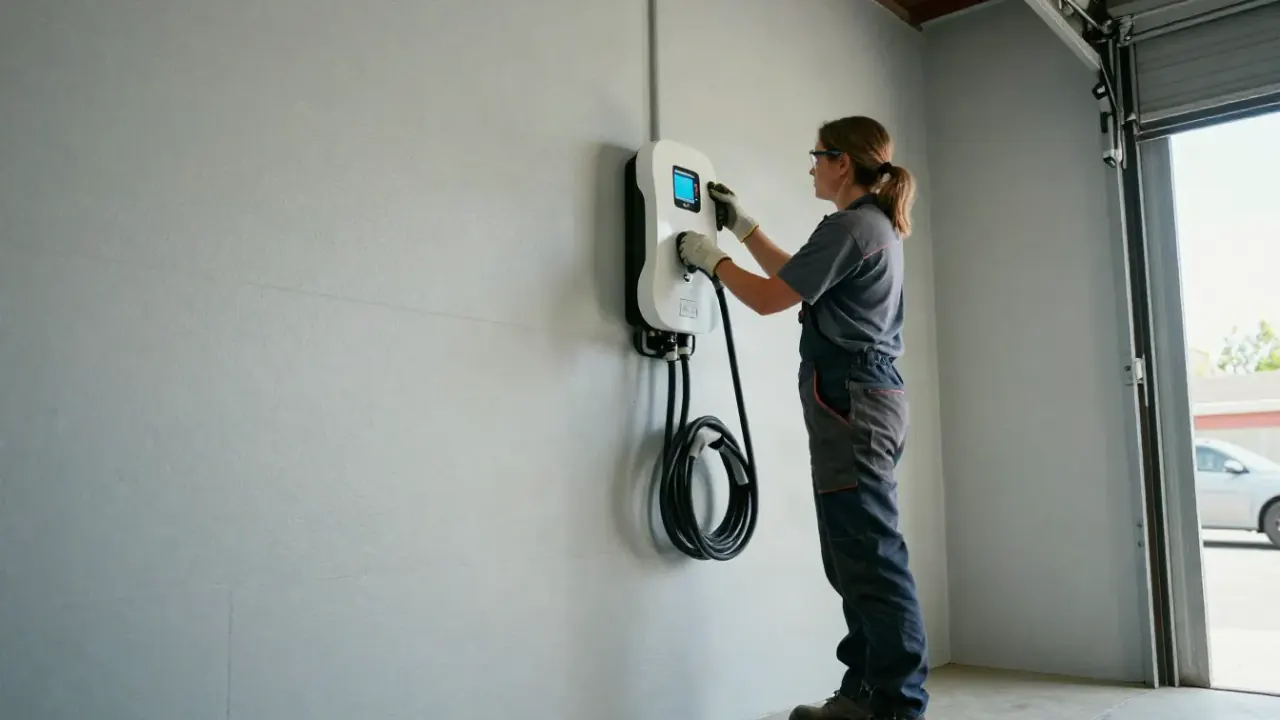
We test with the actual charger and bracket in place, so the holster height, cable routing, and clearance all work for your vehicle and parking spot.
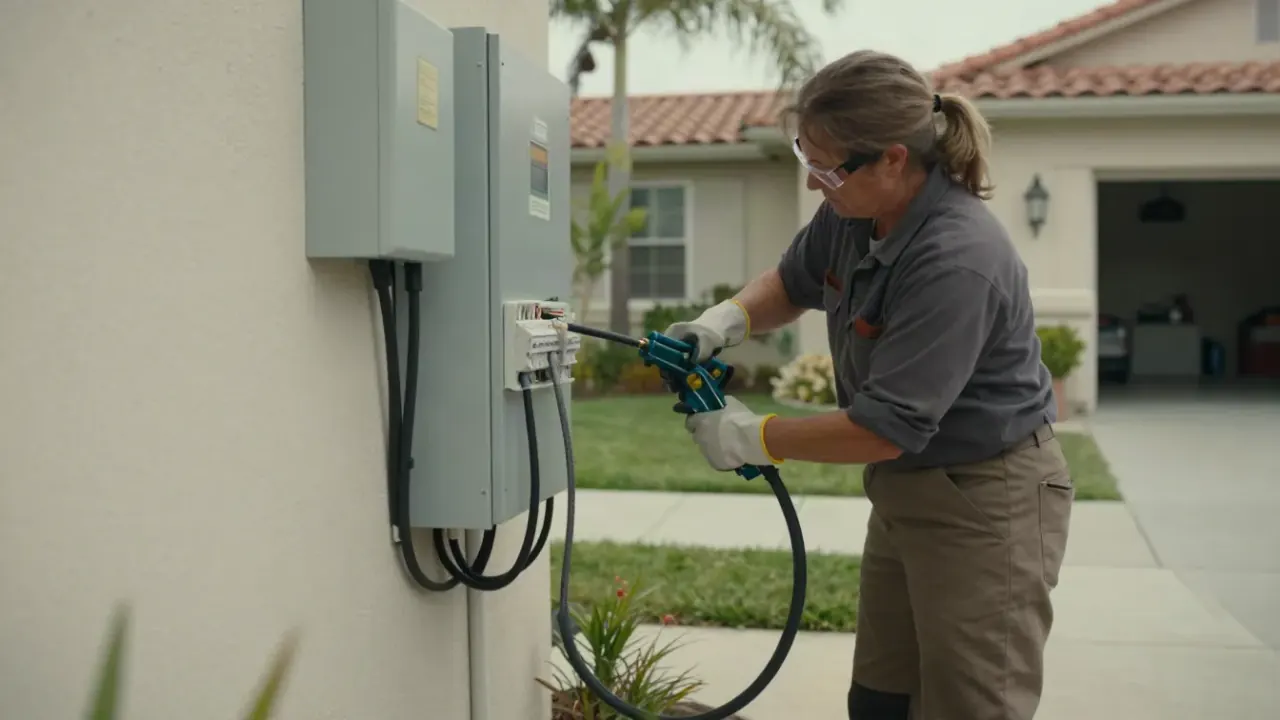
The breaker is matched to the charger's amperage rating, with GFCI protection where NEC Article 625 requires it for the outlet or circuit type.
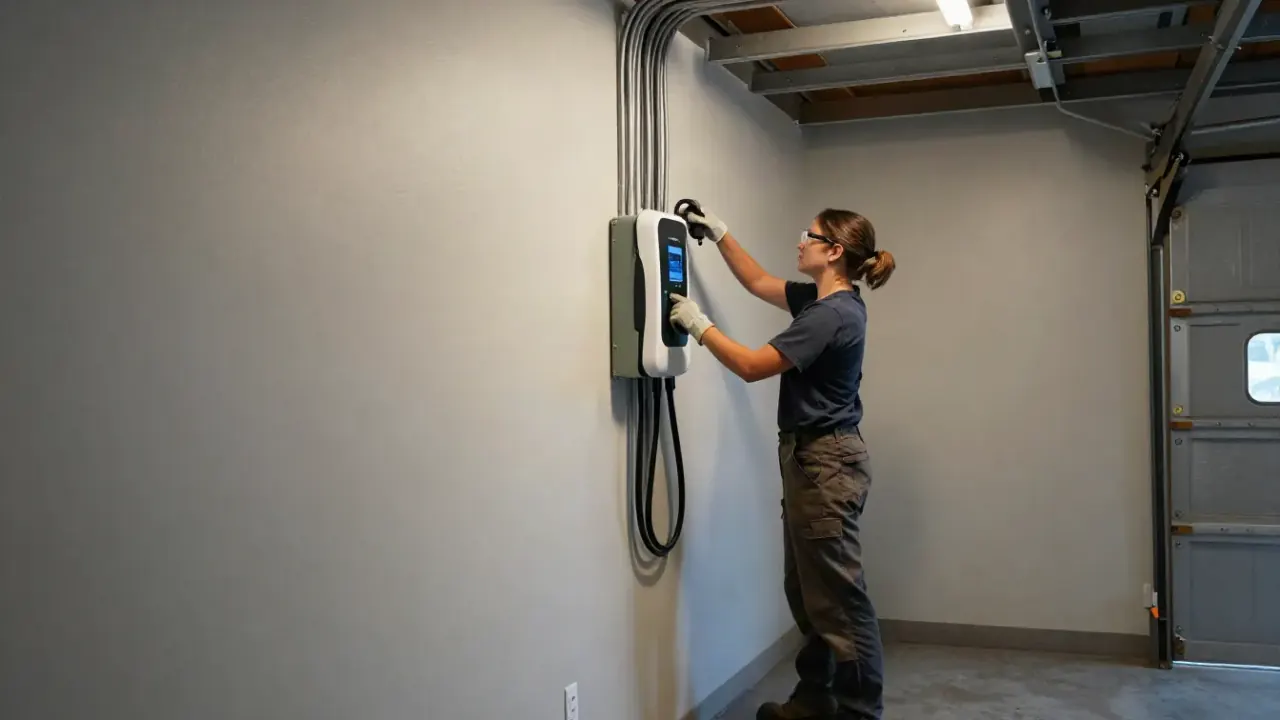
We total the existing household load and add the EV charger demand to confirm your service can carry it. This calculation is what tells us whether a subpanel is sufficient or a service upgrade is needed, and it comes before any materials are ordered.
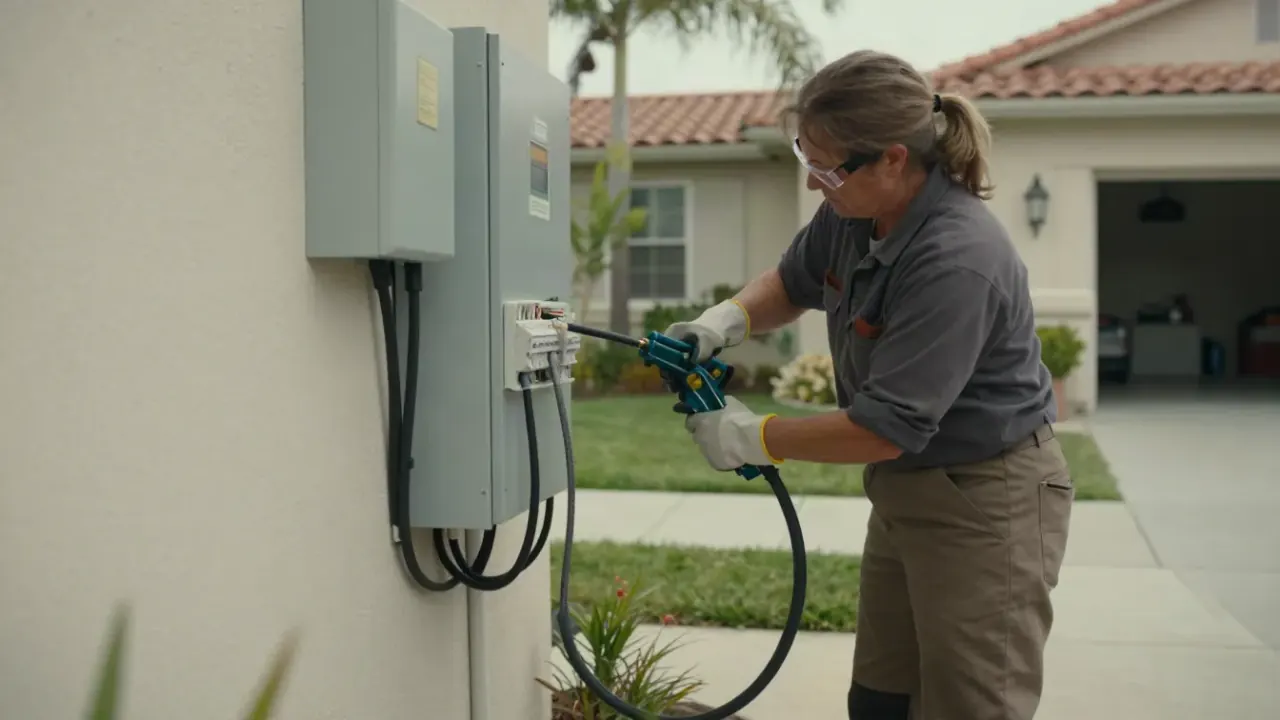
EV charging circuits have specific requirements for overcurrent protection, GFCI, and conductor sizing. We build to Article 625 so the installation passes inspection and the charger operates safely at its rated amperage.
We run a load calculation, confirm the service can carry the added EV load, and install a subpanel in the garage fed from the main. The charger gets a dedicated 240V circuit and the house circuits stay untouched. Full-rate overnight charging on the existing service, with no service upgrade and no tripped breakers.
We size a subpanel and feeder for the combined load of two 40-amp circuits, then install both charger circuits with load management so they share capacity safely. Two chargers running on one subpanel, each car ready by morning without overloading the service.
We install a subpanel fed from the unit's house panel, pull the City of Redondo Beach permit, and provide the inspection sign-off the HOA asks for. A permitted charger installation the HOA accepts, with paperwork on file for resale.
We run a properly sized feeder through conduit to a subpanel in the garage, avoiding voltage drop over the long run, and land the charger circuit there. The charger holds full amperage despite the distance, with cool conductors and no slow-charge complaints.
Redondo Beach housing stock ranges from 1920s bungalows near The Avenues to 1960s tracts in North Redondo and newer builds around Knob Hill, and most of those older homes still run 100-amp service. That is the single biggest factor in how we approach subpanel work here. Coastal salt air also matters: exterior panels and conduit runs near the beach corrode faster, so we use proper enclosures and seal every penetration. The City of Redondo Beach requires an electrical permit for panel work, and inspections are scheduled through the local building department, so we build to NEC Article 625 and California Title 24 from the start. If you are comparing EV charger subpanel installation Redondo Beach options, ask whether the quote includes the load calculation and permit. For homeowners searching for EV charger subpanel wiring near me Redondo Beach, the typical job is a garage-mounted subpanel fed from a main panel in the same garage, which keeps the run short and the cost down. Detached garages and long alley runs in 90278 and 90277 take more conduit and more time, and we quote those after seeing the path.
A North Redondo homeowner had a 100-amp main panel with every breaker space filled and no capacity for a 240V circuit. Two other electricians quoted a full service upgrade at several thousand dollars before the charger could go in.
We ran a load calculation, confirmed the service had capacity, and installed a garage subpanel fed from the main. The Tesla Wall Connector went onto its own 40-amp circuit, and the inspection passed on the first visit. Total cost came in well under the upgrade quotes.
Keep the area around the subpanel clear, check breaker labels once a year, and have the terminations re-torqued if you notice any warmth at the panel cover.
A Golden Hills household had two EVs sharing a single 240V circuit. Charging both on weeknights tripped the breaker regularly, and one car was often only half charged by morning.
We sized a subpanel and feeder for the combined load of two 40-amp circuits and installed both charger circuits with load management. Both cars now charge overnight, and the breaker has not tripped once since install.
Leave load management enabled so the two chargers share capacity, and check the charger app occasionally to confirm both sessions complete on schedule.
An El Nido homeowner's detached garage sat about 60 feet from the main panel, and the existing wiring was undersized. The charger ran hot and charged slower than its rated amperage, and the homeowner worried about the wiring behind the wall.
We ran a properly sized feeder through conduit to a new garage subpanel, sized for the run length to control voltage drop. The charger now holds full amperage through the entire session, and the conductors run cool.
Inspect the exterior conduit run once a year for corrosion or loose fittings, and keep the garage subpanel clear of stored items so it stays accessible.
Most charger problems we get called about trace back to the panel, not the charger. Here are the four we see most often in Redondo Beach homes and what causes them.
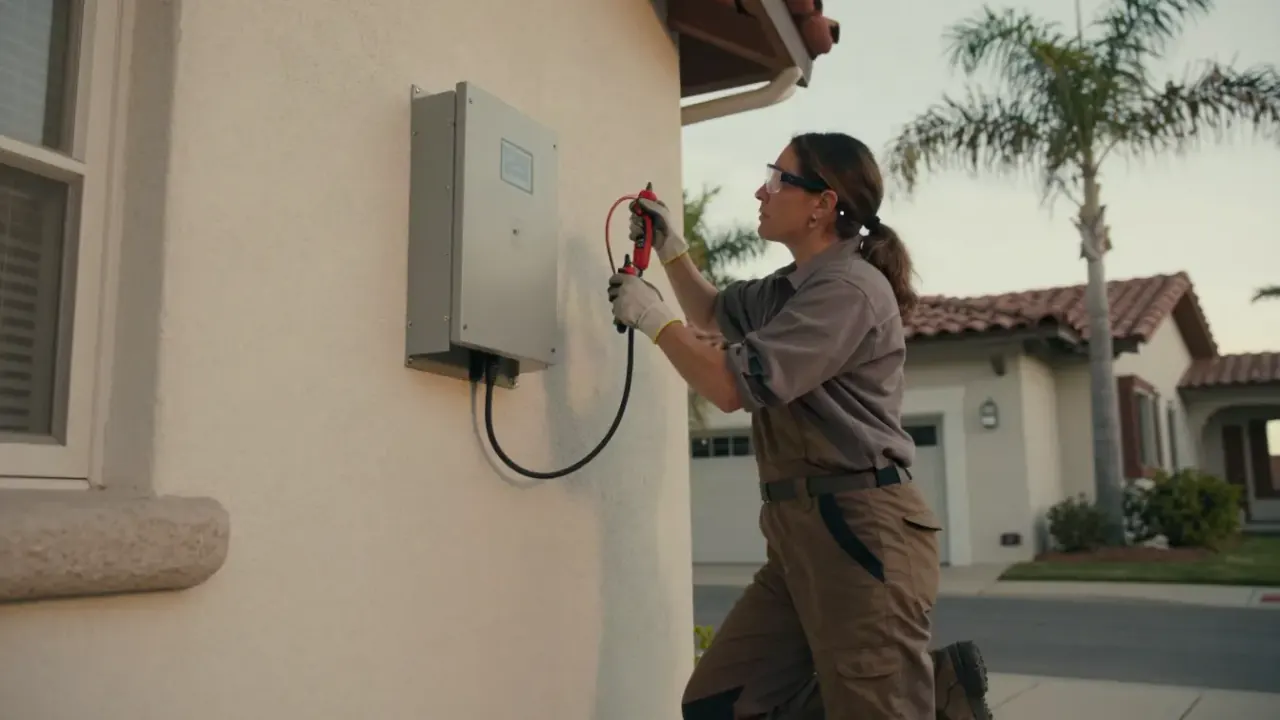
We install a subpanel fed from the main service and move the EV circuit onto it. You get a dedicated 240V breaker without touching the existing house circuits, and the charger runs at full amperage overnight. You cannot add a 240V circuit at all, so the charger sits in the box or gets plugged into a 120V outlet that takes 40 hours to charge.
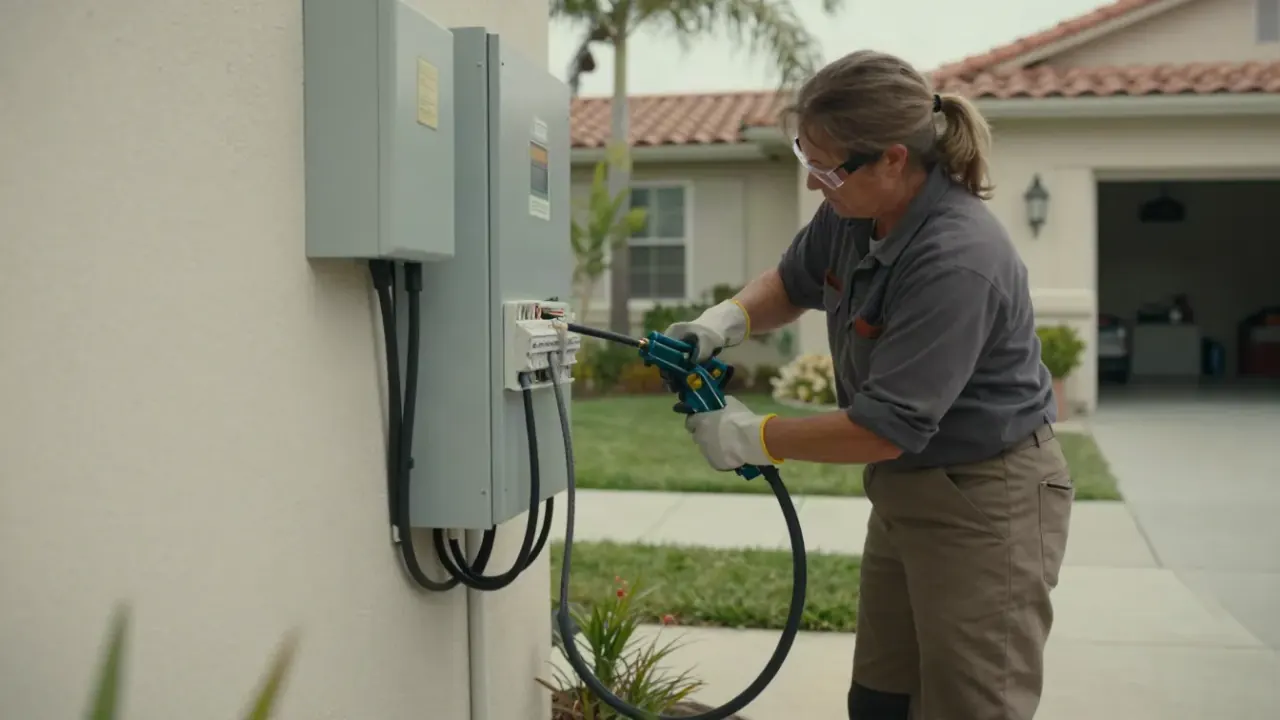
A subpanel isolates the charger on its own circuit so it never competes with the dryer or kitchen appliances. We run the load calculation, size the feeder correctly, and the nuisance trips stop the same day. Charging stops mid-session and you wake up to a half-charged car. Repeated tripping also stresses the breaker and the wiring behind it.
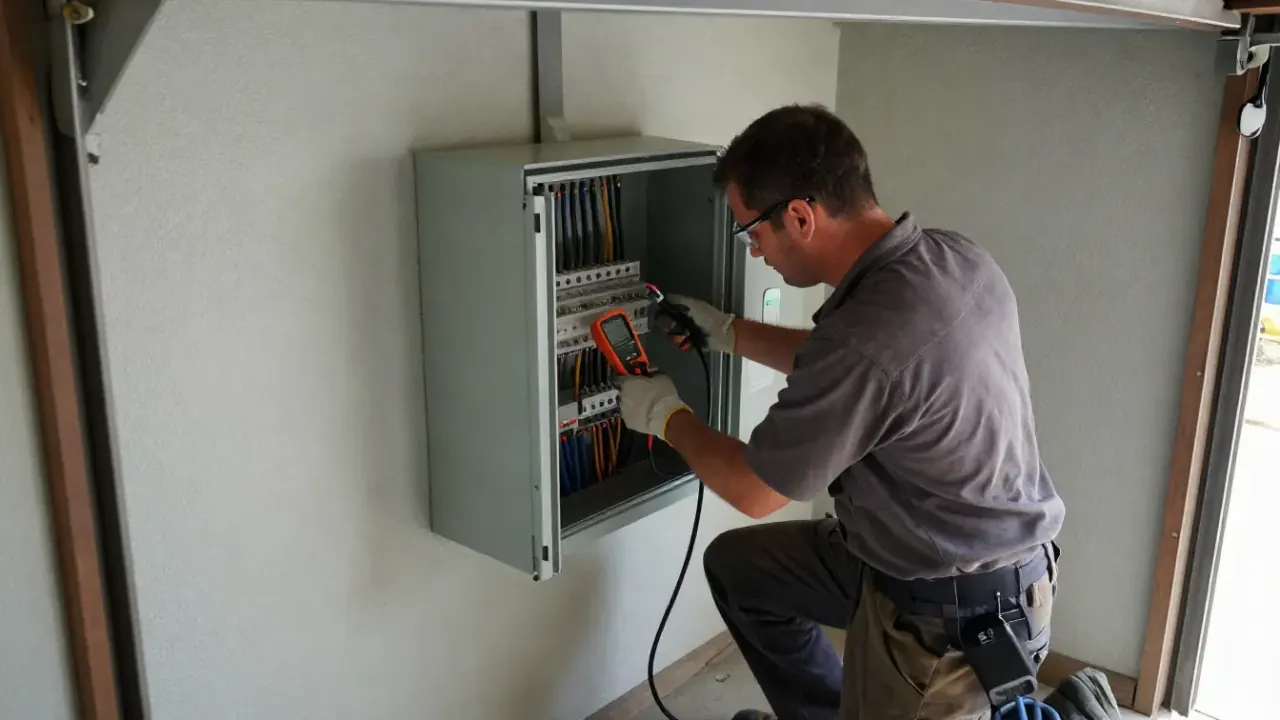
We replace undersized wiring with 6 AWG copper sized to the actual run length and land a breaker matched to the charger. The unit then holds its rated amperage through the whole session without overheating. Voltage drop from undersized conductors makes the charger pull more current than the wire can carry comfortably, which heats the circuit and slows the charge rate.
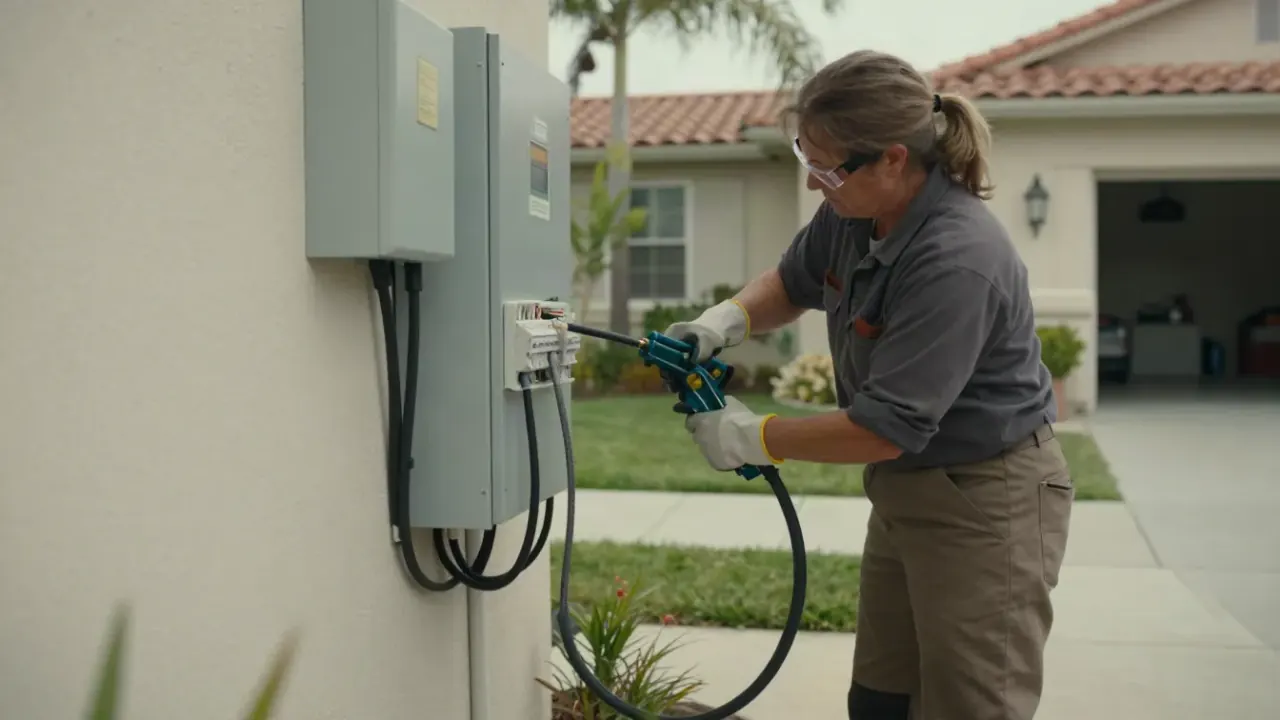
We trace the ground fault, check every termination for loose wiring connections, and confirm the GFCI breaker is the right type for EV supply equipment under NEC Article 625. Most faults clear once the terminations are corrected. A ground fault trips the GFCI and cuts charging. Left alone, it can point to a real wiring fault that damages the charger over time.
When your EV charger shares a circuit with the dryer or kitchen, the breaker trips the moment both run. A dedicated subpanel isolates the charger on its own 240V circuit breaker, so you charge at full amperage overnight without walking out to reset anything. Most customers stop seeing nuisance trips the same day we energize the circuit.
A properly sized subpanel can support multiple EV chargers in Redondo Beach, which matters if you are adding a second electric car in the next year or two. We size the feeder and bus so a second 40-amp circuit drops in later without tearing open the wall again. Planning ahead here costs far less than a second panel install.
We build to NEC Article 625 and California Title 24, pull the Redondo Beach permit, and use UL Listed breakers and enclosures. That matters at resale and at inspection. A permitted subpanel with labeled circuits and a torque-spec record is the difference between a clean sign-off and a correction notice.
Undersized wiring causes voltage drop, which slows charging and heats the conductors. With correct 6 AWG copper and a breaker matched to your charger, a Tesla Wall Connector or JuiceBox holds steady amperage through the whole session. You get the full charge rate you paid for and cooler, safer wiring behind the wall.
Typical 2026 pricing for a residential subpanel installation in Redondo Beach runs $1,200 to $2,800, including permit and materials. The number moves with run length, whether the subpanel is indoors or outside, and how much conduit the path needs. A short garage-to-garage run lands near the low end; a long run to a detached garage pushes toward the top. We quote after a load calculation, so you get a firm number rather than a range. If you are comparing EV charger subpanel installation Redondo Beach quotes, ask what is included before comparing totals.
What your estimate is based on
$1,200 - $2,800 depending on scope A subpanel is almost always cheaper than a full service upgrade, and it gets your charger running at full rate without touching your house circuits. You pay for the capacity you actually need, permitted and inspected, with wiring sized to last.
Clear records you can keep and share.
Written capacity numbers for your service.
Pulled and scheduled on your behalf.
Every breaker identified before we leave.
A subpanel adds breaker capacity when your service has spare room. A service upgrade replaces the main panel when the service itself is maxed out. The load calculation tells you which one you need.
Your main panel is full but the service has spare capacity. A subpanel fed from the main gives the charger its own breaker without replacing anything.
Your service is already at its limit with the EV load added. Then a subpanel alone is not enough, and the main panel needs replacing.
Long runs to a detached garage need larger conductors to control voltage drop. We size the feeder to the actual distance, not a rule of thumb.
Outside these areas? Call and ask, we may still cover you. (310) 294-5464
Most residential subpanel jobs in Redondo Beach run $1,200 to $2,800 in 2026, including permit and materials. The range depends on run length, whether the subpanel is indoors or outside, and how much conduit work the path needs. A short run from a garage-adjacent main panel lands near the low end. Long runs through finished walls or a detached garage push toward the top. We quote the job after a load calculation, so the number you get is the number you pay.
You need one when your main panel has no open space or not enough spare capacity for a dedicated 240V circuit. If the panel is full but the service has capacity, a subpanel is the cheaper fix. If the service itself is maxed out, a service upgrade is the honest answer. We run a load calculation under NEC Article 220 and tell you which situation you are in before any work starts.
You want a CSLB C-10 licensed electrical contractor who pulls the City of Redondo Beach permit and works to NEC Article 625. Ask whether the quote includes the permit, the inspection, and a load calculation. We handle all three, and we wire subpanels for Tesla, ChargePoint, Wallbox, and Emporia chargers regularly. If you are searching for EV charger subpanel wiring near me Redondo Beach, call (310) 294-5464 and we can quote from photos of your panel.
Yes, if the feeder and bus are sized for the combined load from the start. Two 40-amp chargers need a feeder and panel rated for that total, plus a load calculation that accounts for both running at once. We size the subpanel so a second circuit drops in later without opening the wall again. Many Redondo Beach households add the second charger within a year, so planning for it now saves a second install.
Send us a photo of your main panel label and the wall where you want the charger. We will run the load calculation and give you a firm number, permit included. Call (310) 294-5464 and we will tell you what your panel can actually handle.
Call us at (310) 294-5464 or send a note and we will get back to you the same business day. Tell us the car, the charger you want, and where it is going, and we can often give you a ballpark before we drive out. We are in Redondo Beach, California and work Los Angeles County daily.